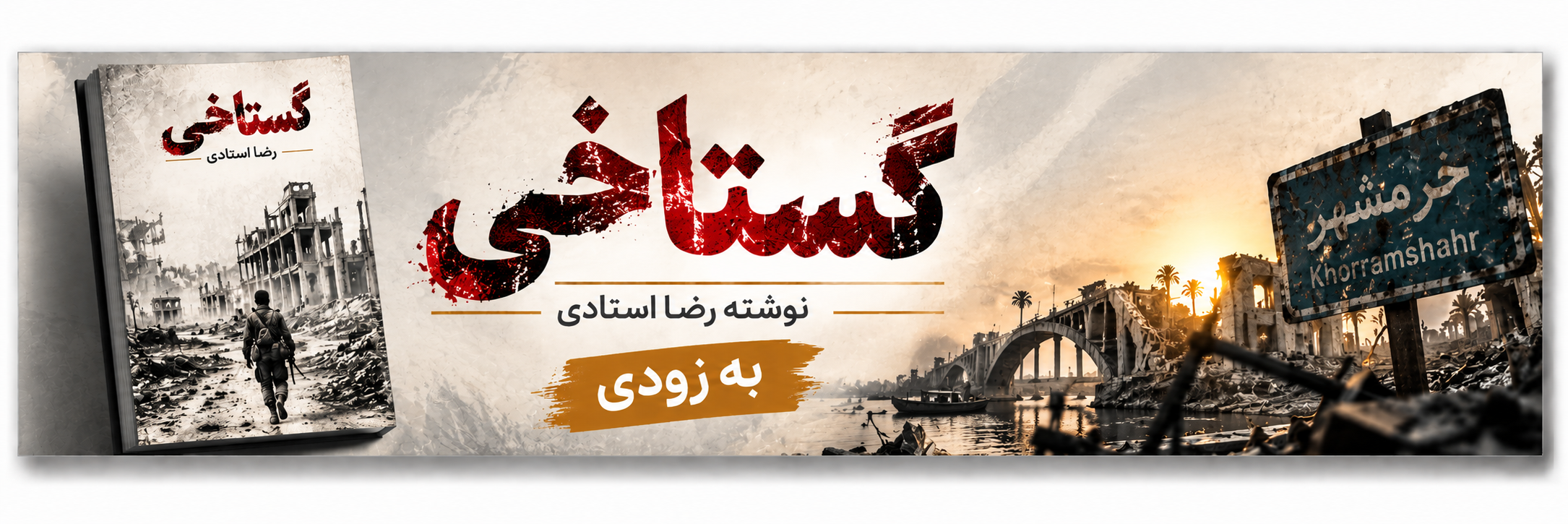
گستاخی
جنگ از مرزها آغاز میشود یا از زندگی آدمها؟
نویسنده: رضا استادی
چاپ اول:
شمارگان:
تعداد صفحات:
طراح جلد:
ناشر:
تلفن تماس ناشر:
خرید اینترنتی:
***
جنگ از مرزها آغاز میشود یا از زندگی آدمها؟
درباره کتاب:
«گستاخی» رمانی تاریخی ـ اجتماعی است که داستان آن از خرمشهر، در روزهای پرالتهاب پس از انقلاب ۱۳۵۷ آغاز میشود و در ادامه، زندگی چند انسان را در آستانه و جریان جنگ ایران و عراق دنبال میکند؛ آدمهایی که هرکدام با گذشته، باورها، ترسها و انتخابهای خود در برابر تغییرات بزرگ سیاسی و اجتماعی قرار گرفتهاند.
داستان از خرمشهرِ پیش از جنگ آغاز میشود؛ شهری زنده و چندفرهنگی در کنار اروندرود که شاهرگ اقتصاد و بزرگ ترین بندر دریایی ایران است.
خرمشهر پس از انقلاب، بهسرعت وارد دورهای از ناامنی، درگیریهای سیاسی و فعالیت گروههای مختلف داخلی و خارجی میشود.
گروهی از جوانان خرمشهری هرکدام با نگاه و انگیزهای متفاوت درگیر فعالیتهای اطلاعاتی و امنیتی میشوند تا شهر را نجات دهند.سردسته آنها جوانی به نام الوند است که باید میان احساسات شخصی نسبت به دختری به نام «شمیم» و علائق سیاسی تعادل برقرار کند.شمیم دختر فاروق الکعبی یکی از چهرههای صاحب نفوذ و قدرت شهر است که به دنبال احیای جریانی با نام «جنبش احیای جنوب» است.
در سوی دیگر، هوتن، جوانی ایرانی که در لندن پزشکی میخواند، با فاصلهای جغرافیایی اما عاطفی با ایران، تحولات کشورش را دنبال میکند؛ فاصلهای که بهتدریج معنای وطن، مهاجرت، تعلق و انتخاب را برای او پیچیدهتر میکند.
با آغاز جنگ، خرمشهر از یک شهر مرزی به یکی از کانونهای اصلی جنگ تبدیل میشود و زندگی شخصیتها وارد مرحلهای تازه میگردد.کتاب روایت جنگ را تنها از منظر میدان نبرد دنبال نمیکند؛ بلکه تلاش میکند نشان دهد جنگ چگونه وارد خانهها، روابط خانوادگی، خاطرات و سرنوشت آدمهای عادی میشود. مهاجرت، آوارگی، مرگ، اسارت، فقدان، ترس و تلاش برای زنده ماندن، بخشی از تجربه شخصیتهایی است که جنگ مسیر زندگیشان را تغییر میدهد.
«گستاخی» در عین حال داستانی درباره آدمها در برابر تاریخ است؛ درباره کسانی که در مقاطع مختلف تصور میکنند میتوانند مسیر زندگی خود را انتخاب کنند، اما حوادث بزرگ سیاسی و تاریخی انتخابهای تازهای پیش رویشان میگذارند. رمان تلاش میکند میان زندگی خصوصی شخصیتها و وقایع بزرگ تاریخی پیوند برقرار کند و نشان دهد که تاریخ، فقط مجموعهای از تاریخها، عملیاتها و حوادث سیاسی نیست؛ بلکه در نهایت، در زندگی و سرنوشت انسانها اتفاق میافتد.
رمان با تکیه بر جزئیات زندگی روزمره، فضای اجتماعی خرمشهر، مناسبات میان مردم، فعالیتهای سیاسی و امنیتی، و سپس تجربه جنگ، تصویری داستانی از سالهای منتهی به جنگ ایران و عراق و نخستین سالهای آن ارائه میدهد؛ روایتی که در آن شهر خرمشهر خود به یکی از شخصیتهای اصلی داستان تبدیل میشود.
Author: Reza Ostadi
Does war begin at the borders, or in people’s lives?
About the Book
Gostaakhi is a historical-social novel that begins in Khorramshahr during the turbulent days following the 1979 Iranian Revolution and follows the lives of several people on the eve of, and throughout, the Iran-Iraq War—people who, each with their own past, beliefs, fears, and choices, find themselves confronted by profound political and social transformations.
The story begins in Khorramshahr before the war: a vibrant, multicultural city on the banks of the Arvand River, the lifeline of the region’s economy and home to Iran’s largest seaport.
Following the Revolution, Khorramshahr rapidly enters a period of insecurity, political conflict, and the activities of various domestic and foreign groups.
A group of young men from Khorramshahr, each driven by different perspectives and motives, become involved in intelligence and security activities in an attempt to protect the city. At the center of the group is Alvand, a young man who must find a balance between his personal feelings for a woman named Shamim and his political commitments. Shamim is the daughter of Farouq Al-Kaabi, one of the city’s influential and powerful figures, who seeks to revive a movement known as the Southern Revival Movement.
Elsewhere, Houten, a young Iranian studying medicine in London, follows the upheavals in his homeland from a geographical distance that is nevertheless deeply emotional—a distance that gradually complicates his understanding of homeland, migration, belonging, and choice.
With the outbreak of war, Khorramshahr is transformed from a border city into one of the principal centers of the conflict, and the lives of the characters enter a new phase. The novel does not portray war solely through the battlefield. Instead, it seeks to show how war enters homes, family relationships, memories, and the destinies of ordinary people. Migration, displacement, death, captivity, loss, fear, and the struggle to survive become part of the experience of characters whose lives are irrevocably altered by war.
At the same time, Gostaakhi is a story about people confronting history—people who, at different moments, believe they can choose the course of their own lives, only to find that major political and historical events place entirely new choices before them. The novel seeks to connect the private lives of its characters with the larger events of history, showing that history is not merely a collection of dates, military operations, and political events; ultimately, it takes place in the lives and destinies of human beings.
Through details of everyday life, the social atmosphere of Khorramshahr, relationships among its inhabitants, political and security activities, and later the experience of war, the novel presents a fictional portrait of the years leading up to the Iran-Iraq War and its early years. At the heart of the story, the city of Khorramshahr itself becomes one of the novel’s principal characters.